

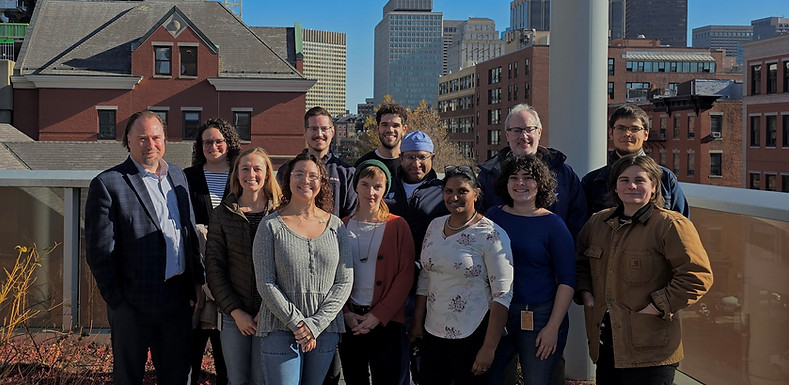
Meet Our Team

Surya Reis, PhD
Director Research Operations, CNL
Executive Director, MPL
Co-Chair LMDG, MGH
sreis [at] mgh.harvard.edu
My main scientific interests center around understanding the biological and chemical underpinnings impacting mental health states and identifying what can be measured, quantified, and modified to ultimately improve human wellbeing. My work focuses on high-throughput assay development for CNS drug discovery with an emphasis on high-content imaging, automation, and data analysis pipeline development.
I have studied Biology and Mathematics at the University of Mainz, Germany, received a B.Sc. in Human Genetics at UCL, London, and a Ph.D. in Clinical Genetics from the Erasmus MC, Rotterdam before arriving at MGH.

Paloma Tuttle, PhD
Research Lab Operations Manager
PTUTTLE-VASSEUR [at] mgh.harvard.edu
As a bioorganic chemist by training, I am broadly interested in advancing novel and ethnobotanical therapeutic treatments and illuminating their underlying molecular mechanisms. I earned a BS in Chemistry from Florida International University and a PhD in Chemistry from Harvard University, completing my dissertation on the elucidation of a novel rearrangement mechanism of inhibitor adducts which facilitates targeted treatment of neuropsychiatric disorders and confers drug resistance in acute myeloid leukemia. I joined the Haggarty lab to support administrative operations and innovation in research programs.

Daniel Fass, PhD
Staff Scientist
DFASS [at] mgh.harvard.edu
My long-term scientific goals are to improve our understanding of pathological mechanisms underlying neuropsychiatric diseases, and to discover novel therapeutics for these diseases. Much of my work involves elucidating the phenotypic consequences of disease-causing mutations in genes encoding transcription factors and transcriptional coregulator proteins. I screen small molecules for their ability to reverse these phenotypic consequences. In addition to transcription factors, I have also worked on ion channels, GPCRs, and signal transduction pathways involved in neuroplasticity and neuropsychiatric diseases.
I obtained a BA in Psychology at Rutgers University, a PhD in Neuroscience at the University of Pittsburgh, and post-doctoral training at the Oregon Health & Science University.

Chialin Cheng, PhD
Staff Scientist
CCHENG3 [at] mgh.harvard.edu
-

Debasis Patnaik, PhD
Staff Scientist
DPATNAIK [at] mgh.harvard.edu
My main interest is drug discovery with epigenetic targets.

Carl Alexander Sandhof, PhD
Postdoctoral Research Fellow
CSANDHOF [at] mgh.harvard.edu
My research interests are the molecular and cellular mechanisms which underlie the accumulation and intercellular transmission of prion-like proteins that is observed in neurological disorders with CNS proteinopathy. I believe that understanding how these mechanisms are connected to the diseases’ pathogenesis and how we can modulate them are fundamental for the development of novel pharmacological interventions.
My current research focuses on the potential of using mTOR independent autophagy activating small molecules to clear accumulated misfolded proteins in patient derived iPSC tauopathy models. Being able to enhance the cell’s own degradative capacity which is frequently impaired in CNS proteinopathies might enable us to treat patients that suffer from diseases such as Alzheimer’s disease and FTDs.
I studied at the Ruprecht Karl University of Heidelberg, Germany, where I obtained a bachelor’s degree in Biosciences, a master’s degree in Molecular and Cellular Biology, followed by a Dr. rer. nat. in Biology. In my doctoral studies I investigated genetic modifiers of cell-to-cell transmission and endo-lysosomal escape of the prion-like proteins α-synuclein and tau.

Sergio Lázaro Martínez
Graduate Student
SLAZAROMARTINEZ [at] mgh.harvard.edu
I hold a BSc in Biotechnology from Universidad Politécnica de Madrid, Spain, and an MSc in Cognitive and Clinical Neuroscience, with a specialization in Fundamental Neuroscience, from Maastricht University, the Netherlands. My research is driven by a strong interest in the fundamental neurobiological mechanisms underlying the cognitive and emotional effects of psychedelic drugs. Currently, as a PhD student at the Haggarty Lab, I am building on the research that formed the basis of my master’s thesis, focusing on the therapeutic potential of understudied but ethnobotanically significant psychedelic plants and preparations. Collaborating closely with the Medicinal Plant Lab, I adopt a neuroethnopharmacology approach to discover novel neuroplasticity modulators, giving serious consideration to traditional methods of preparation and use of psychedelic plants, and integrating biochemical, imaging, and electrophysiological techniques to study their mechanisms of action.

AJ Schick
Graduate Student, Chemical Biology, Harvard
ASCHICK [at] g.harvard.edu
I’m currently a graduate student with the Chemical Biology, and Leder Human Biology and Translational Medicine programs at Harvard Medical School. My research interests include using chemical probes to learn about the disease mechanisms of migraine and other headache disorders as well as understanding how drugs that treat these disorders affect the central nervous system. Additionally, I’m investigating possible novel headache treatments derived from natural products.
I’m originally from Stamford, Connecticut, but I’ve spent a large portion of my childhood growing up in North Falmouth, Massachusetts. My hobbies outside of the lab include creating and producing music with my band, watching F1 racing or any other motorsport, as well as cooking new recipes with my girlfriend.

Karis Will
Graduate Student, Chemistry & Chemical Biology, Harvard
KWILL [at] g.harvard.edu
My interests lie at the nexus of chemical biology, organic synthesis and neuroscience. My training as an organic chemist helps me synergize my interests in biological pathways with understanding molecular mechanisms of classes of psychoactive molecules.

Ian Johnson
Research Technician
IDJOHNSON [at] g.harvard.edu
I obtained a master’s degree in medical science and bachelor’s in molecular biology and biotechnology from the University of Delaware. My goal is to expand my knowledge as I start my career in the world of molecular biology and biotechnology.